
The Role of AI in the Construction Industry
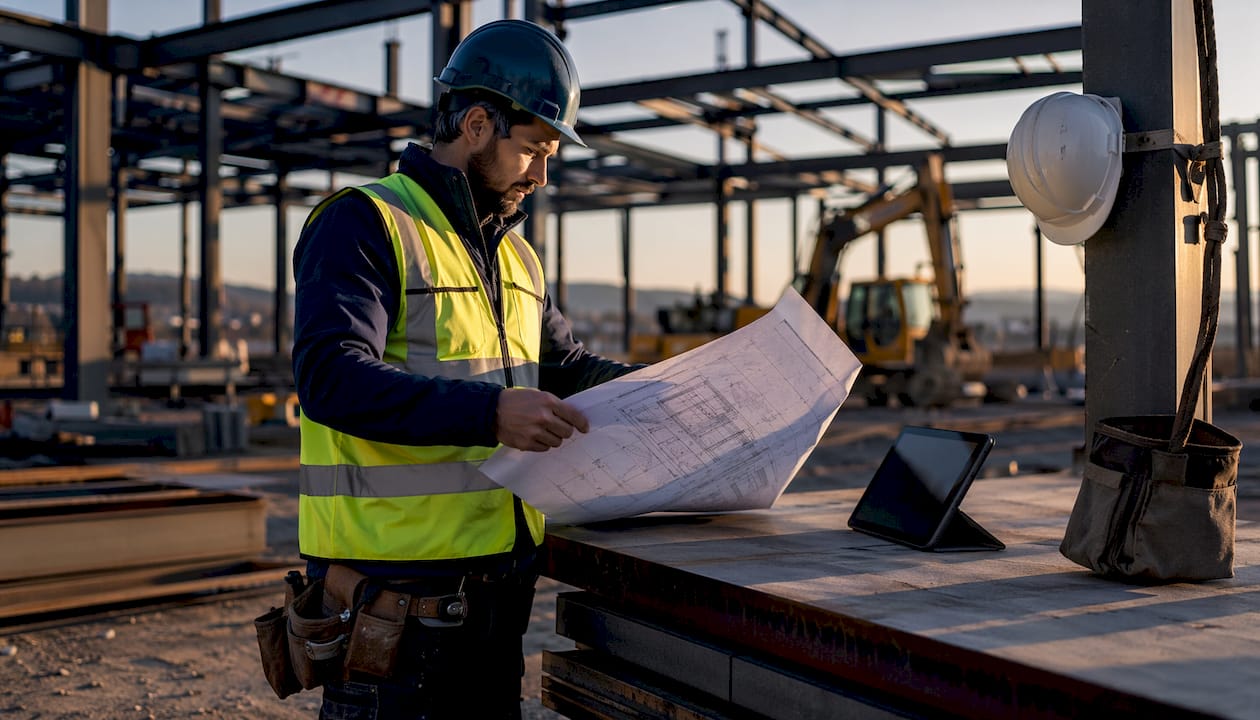
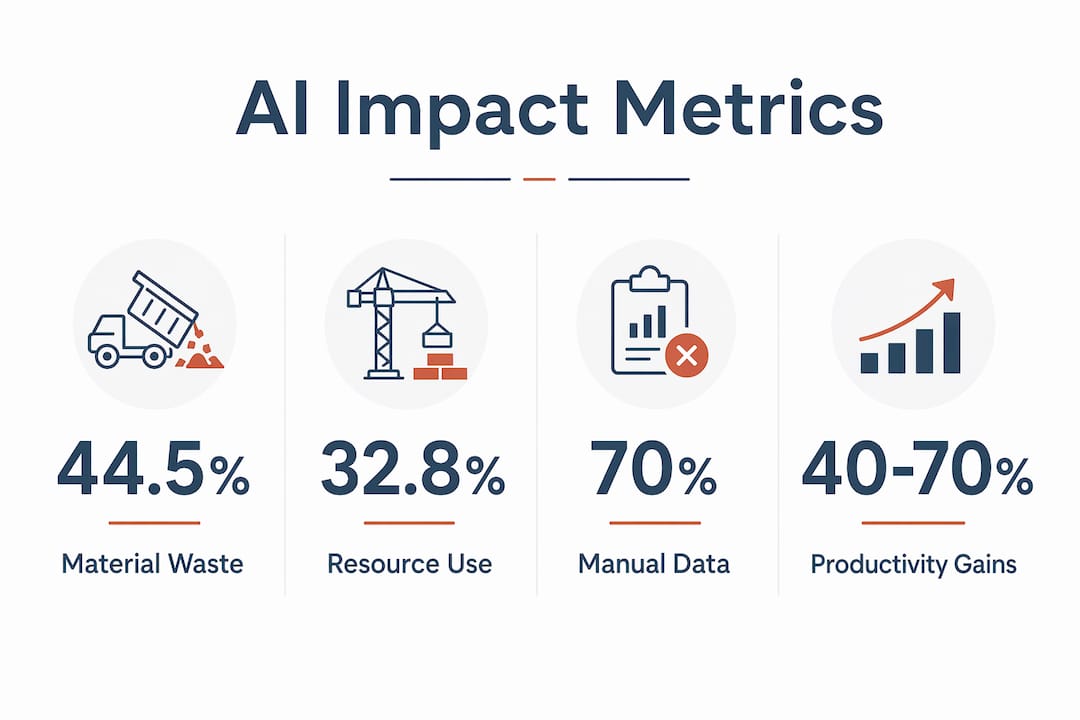
Artificial intelligence in construction is defined as the application of machine learning, predictive algorithms, and automation to plan, execute, and manage building projects with measurably better outcomes. The role of AI in the construction industry now spans scheduling, waste reduction, safety oversight, and commercial model design. AI-based scheduling models reduce average material waste by 44.5% and shorten project duration by 14.4%. That single data point reframes AI not as a future concept but as a present operational tool. Designflow-build is one platform built specifically to deliver these gains to contractors who cannot afford to wait.
How does AI improve construction project scheduling and waste reduction?
AI scheduling uses Python-based solvers and simulation engines to model site scenarios, account for resource constraints, and sequence activities in ways no spreadsheet can replicate. The result is a fundamentally different approach to planning. Traditional scheduling relies on static Gantt charts updated manually. AI scheduling updates continuously as conditions change on site.

The numbers behind this shift are significant. Resource utilization improves by 32.8% when AI scheduling replaces traditional methods. That improvement means fewer idle crews, fewer material overorders, and fewer costly delays. Walbridge demonstrated this at scale on a $3 billion Michigan project, where an AI-enabled materials platform achieved around 40% material cost savings and diverted 8,000 tons of wood waste from landfill.
| Metric | Traditional scheduling | AI scheduling |
|---|---|---|
| Material waste | Baseline | Reduced by 44.5% |
| Project duration | Baseline | Shortened by 14.4% |
| Resource utilization | Baseline | Improved by 32.8% |
| Schedule updates | Manual, periodic | Automated, continuous |
The role of AI in construction waste reduction goes beyond materials. AI-driven oversight platforms use cameras and sensors coupled with machine learning to classify materials, monitor sorting compliance, and flag waste diversion issues in real time. That is a level of site visibility that no traditional site manager can achieve alone.
Pro Tip: Before integrating AI scheduling into your workflow, map your current resource allocation process in detail. AI models produce better outputs when fed clean, structured baseline data. Garbage in, garbage out applies here more than anywhere else.
In what ways does AI enhance efficiency for service contractors?
AI-driven automation for contractors covers a wide range of tasks that previously consumed hours of manual effort. Generative AI and large language models now handle automated documentation, knowledge retrieval, and project decision support. That expansion moves AI well beyond predictive modeling into the daily operational fabric of a construction firm.
For service contractors specifically, the efficiency gains show up in both field and office operations. Automation in MEP labor management, for example, reduces the time supervisors spend on crew scheduling and compliance tracking. AI tools cross-reference labor availability, certification requirements, and project timelines automatically. The role of AI in service contractor efficiency is to remove the administrative drag that keeps skilled people from doing skilled work.
Key efficiency gains contractors report with AI adoption:
- Automated documentation: AI generates daily reports, RFI logs, and change order records without manual input.
- Labor scheduling: AI matches crew availability and certifications to project needs in real time.
- Supplier coordination: AI tracks delivery schedules and flags delays before they affect the critical path.
- Cost tracking: AI monitors job costing against budgets continuously, not just at month end.
- Blueprint takeoff: AI blueprint takeoff tools extract quantities from drawings in minutes rather than hours.
Designflow-build reports a 70% reduction in manual data entry for contractors using its AI-native ERP platform. That figure represents real hours returned to project teams every week.
What commercial shifts does AI adoption trigger in construction?
AI adoption does not just change how work gets done. It changes how work gets priced. Traditional hourly billing models are misaligned with AI-driven efficiency gains. When a task that took 10 hours now takes 2, billing by the hour compresses your margin without delivering more value to the client.
AI-enabled services can deliver productivity gains of 40%–70%, but the main bottlenecks are commercial, not technical. Firms that adapt pricing models capture AI value better and avoid margin compression. Firms that do not adapt risk watching competitors undercut them on price while still running on time-and-materials contracts.
The governance dimension matters equally. When AI produces a project schedule or a cost forecast, accountability for that output must be clearly assigned. Contracts written before AI adoption rarely address this. The role of AI in general contracting now requires legal and commercial frameworks that define who owns AI-generated recommendations and what happens when those recommendations prove wrong.
Most firms use AI efficiency gains as a margin buffer rather than passing value to clients. That approach works short term. Long term, clients will recognize the efficiency gap and demand pricing that reflects it.
Pro Tip: Start the commercial conversation before the technology conversation. Brief your clients on how AI changes delivery economics before you renegotiate rates. Clients who understand the value logic are far more likely to accept outcome-based pricing than clients who feel surprised by it.
How do AI tools support construction oversight and project management?
AI monitoring systems improve construction oversight through early risk detection and automated safety compliance alerts. Integration with project management platforms enhances decision-making speed and accuracy across the project lifecycle. The role of AI alerts in construction oversight is to surface problems before they become delays or injuries.
Cameras and sensors feed data into machine learning models that classify site conditions, track material movements, and flag deviations from the approved plan. A site manager reviewing a dashboard sees exceptions, not raw data. That shift from data collection to exception reporting is where AI delivers its clearest value in oversight.
| Oversight task | Without AI | With AI |
|---|---|---|
| Safety compliance checks | Manual walkthroughs, periodic | Continuous sensor and camera monitoring |
| Schedule deviation detection | Weekly review meetings | Real-time alerts on critical path changes |
| Material tracking | Manual logs, prone to error | Automated classification and location tracking |
| Risk identification | Reactive, post-incident | Predictive, pre-incident |
| Reporting accuracy | Dependent on individual input | Standardized, automated, auditable |
The DCMA 14-point assessment is a recognized framework for evaluating schedule health. AI platforms can run DCMA checks continuously rather than at project milestones. That frequency catches logic errors and float erosion weeks earlier than traditional review cycles allow.
What role do AI tools play for small contractors?
Small contractors gain the most from AI adoption relative to their size, because the efficiency gains address their biggest constraint: limited administrative capacity. A five-person general contracting firm cannot afford a dedicated scheduler, estimator, and compliance officer. AI tools cover all three functions at a fraction of the cost.
Accessible AI solutions for small firms include cloud-based platforms with no large upfront hardware investment, subscription pricing that scales with project volume, and implementation timelines measured in weeks rather than months. Designflow-build implements in 2–4 weeks with a 98% user adoption rate. That speed matters for small firms that cannot absorb a six-month software rollout.
Common pitfalls for small contractors adopting AI include choosing tools that require significant data cleaning before they produce useful outputs, underestimating the training time for field staff, and selecting platforms that do not integrate with existing accounting systems. The role of AI tools for small contractors is most effective when the platform consolidates functions rather than adding another disconnected app.
Recommended AI tool categories for small contractors:
- AI scheduling tools: Automate critical path analysis and resource leveling for projects under $10 million.
- AI estimating and takeoff: Reduce bid preparation time with automated quantity extraction from drawings.
- AI field reporting: Generate daily logs and safety reports from mobile inputs without manual write-ups.
- AI financial tracking: Monitor budget versus actual costs in real time and flag overruns early.
- AI document management: Retrieve submittals, RFIs, and specifications instantly using natural language search.
AI in commercial construction scheduling shows that the same scheduling logic benefiting large general contractors applies directly to smaller commercial projects. The technology scales down effectively.
Key Takeaways
AI in construction delivers measurable gains in scheduling, waste reduction, and oversight, but capturing full value requires aligning commercial models and human expertise with the technology.
| Point | Details |
|---|---|
| Scheduling and waste reduction | AI scheduling cuts material waste by 44.5% and shortens project duration by 14.4%. |
| Service contractor efficiency | AI automates documentation, labor scheduling, and cost tracking, reducing manual data entry by 70%. |
| Commercial model alignment | Hourly billing erodes AI value; outcome-based pricing captures it. |
| Oversight and alerts | AI monitoring detects safety and schedule risks in real time, before they become incidents. |
| Small contractor adoption | Cloud-based AI platforms with short implementation timelines give small firms enterprise-level capabilities. |
What I’ve learned from watching AI land on construction sites
The Human-in-the-Loop model is the right frame for AI in construction, and not just because it sounds balanced. I’ve watched firms hand too much authority to AI outputs and then scramble when the model misread a site condition or missed a subcontractor dependency. The technology is genuinely powerful. It is not infallible.
What I find more interesting is the commercial blind spot. Firms are capturing AI efficiency internally and calling it margin improvement. That works until a competitor starts offering the same outcome at a lower price because they’ve rebuilt their pricing model around AI delivery costs. The firms that will lead in 2027 are not the ones with the best AI tools. They are the ones that redesigned their commercial logic alongside their operations.
The other thing worth saying plainly: AI does not replace experienced project managers. It makes their judgment more consequential. When a senior PM reviews an AI-generated risk flag, their call on whether to act carries more weight than ever because the data behind it is better than anything a manual process could produce. That is a good outcome for the profession, not a threat to it.
— Keith
Designflow-build’s AI tools for construction teams
Designflow-build combines project management, accounting, and field operations into one AI-native ERP built specifically for contractors. You get AI-driven risk prediction, automated cost tracking, and real-time schedule monitoring without stitching together separate apps.

The platform’s AI construction scheduling software applies CPM and Monte Carlo analysis to your project data automatically. Designflow-build also offers AI-powered ERP and takeoff tools that reduce bid preparation time and eliminate manual data entry. Implementation takes 2–4 weeks with guided onboarding and no army of consultants required. If you want to see what AI-driven project management looks like in practice, Designflow-build is built to show you.
FAQ
What is the role of AI in the construction industry?
AI in construction automates scheduling, cost tracking, safety monitoring, and documentation to reduce waste and improve project outcomes. It applies machine learning and predictive algorithms to tasks that previously required significant manual effort.
How does AI reduce construction waste?
AI-based scheduling models reduce material waste by 44.5% by optimizing resource allocation and sequencing activities to eliminate overordering and idle time.
What is AI project management in construction?
AI project management uses automated alerts, predictive risk detection, and real-time schedule monitoring to give project managers earlier and more accurate visibility into site conditions and budget performance.
Can small contractors afford AI tools?
Cloud-based AI platforms with subscription pricing and short implementation timelines make AI accessible to small firms. Designflow-build, for example, implements in 2–4 weeks with no large upfront hardware cost.
How does AI change construction contracts and pricing?
AI-driven efficiency gains make traditional hourly billing models less viable. Firms are shifting to outcome-based pricing that reflects the actual cost and speed of AI-assisted delivery rather than time spent on tasks.